The TP-Link RE615X is a dual-band Wi-Fi 6 extender for homes where a router’s signal does not reach every room reliably.
This tp link ax1800 review looks at its coverage-focused design, Ethernet port, app setup, and the limits buyers should weigh before choosing an extender.
TP-Link RE615X Review Summary
The quick verdict
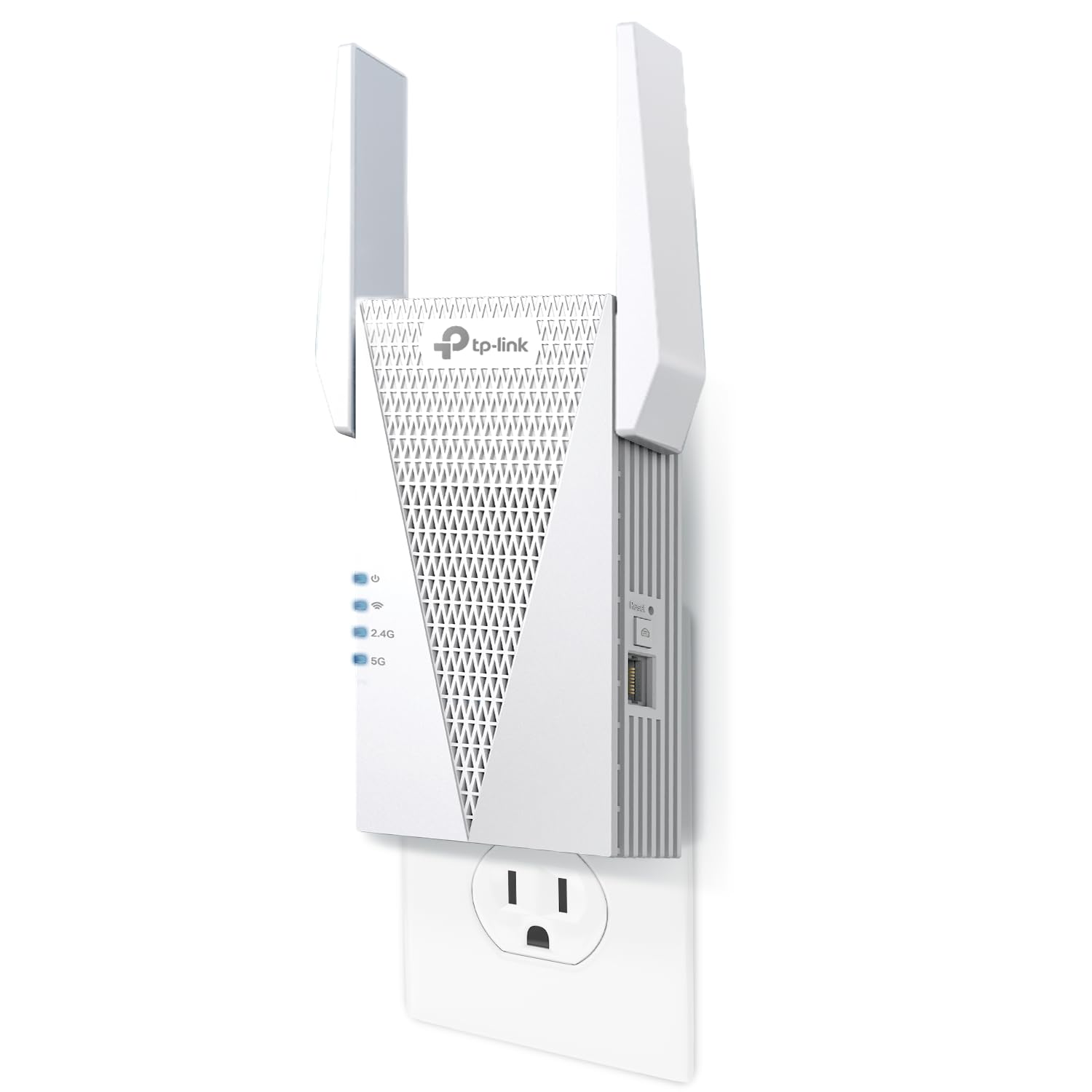
1,000+ ratings
Read Amazon ReviewsTP-Link RE615X
A useful fit for homes needing broader Wi-Fi coverage, app-guided setup, and a wired connection for a nearby device.
- Dual-band Wi-Fi 6 extender with maximum listed rates of 1,201 Mbps on 5 GHz and 574 Mbps on 2.4 GHz.
- Two high-gain directional antennas and Beamforming technology are designed to improve signal reach and reliability.
- Coverage is listed up to 2,100 square feet, with support for up to 64 devices.
- Gigabit Ethernet port for connecting a wired device near the extender.

Pros
- Dual-band Wi-Fi 6 gives buyers a choice of 2.4 GHz reach and faster 5 GHz connections.
- Directional antennas and Beamforming are useful design choices for extending signal toward a weak-coverage area.
Consider before buying
- An extender improves coverage rather than directly increasing the internet speed supplied by the router.
- The listed coverage area and device capacity are maximums; walls, placement, distance, and network conditions can affect results.
Read the full review summary
The RE615X extends an existing router’s Wi-Fi across the 2.4 GHz and 5 GHz bands, with listed maximum link rates of 574 Mbps and 1,201 Mbps respectively.
Two directional antennas and Beamforming are intended to help direct coverage, while the stated coverage and device limits offer a rough guide rather than a guarantee for every floor plan.
Its practical extras include a Gigabit Ethernet port, TP-Link Tether app setup, a signal indicator for placement, and compatibility with EasyMesh routers.
It suits buyers trying to improve reach in a specific part of the home, especially when a wired connection for a nearby device is useful.
It does not add internet speed by itself, and it does not support 6 GHz.
The buying factors
TP-Link RE615X Scorecard
Editorial scores reflect listed features and buyer fit; they are not laboratory measurements or customer ratings.
Coverage-focused design
Two directional antennas and Beamforming target broader, more reliable signal reach, with coverage listed up to 2,100 square feet.
Wireless capacity
Dual-band Wi-Fi 6 with up to 1,201 Mbps on 5 GHz and 574 Mbps on 2.4 GHz provides useful capacity for an extender, subject to real-world conditions.
Wired connectivity
The Gigabit Ethernet port can connect a nearby wired device through the extended network.
Setup and placement
The Tether app and signal indicator are practical aids for setup and finding a location with a usable connection to the router.
Mesh flexibility
EasyMesh compatibility can support a coordinated network with a compatible router, though it is not compatible with Deco mesh systems.
Band compatibility
It covers the common 2.4 GHz and 5 GHz bands but does not support 6 GHz.
Key Features and Specifications of TP-Link RE615X
- Dual-band Wi-Fi 6 extender with maximum listed rates of 1,201 Mbps on 5 GHz and 574 Mbps on 2.4 GHz.
- Two high-gain directional antennas and Beamforming technology are designed to improve signal reach and reliability.
- Coverage is listed up to 2,100 square feet, with support for up to 64 devices.
- Gigabit Ethernet port for connecting a wired device near the extender.
- EasyMesh compatibility with compatible routers; not compatible with Deco mesh systems.
- TP-Link Tether app setup and management, plus an intelligent signal indicator to help with placement.
- Smart Adaptive Roaming is designed to connect devices to the strongest signal as users move around the home.
Pros and Cons of TP-Link RE615X
Pros
- Dual-band Wi-Fi 6 gives buyers a choice of 2.4 GHz reach and faster 5 GHz connections.
- Directional antennas and Beamforming are useful design choices for extending signal toward a weak-coverage area.
- Gigabit Ethernet adds a wired connection option for a nearby device.
- App setup and a signal indicator can make placement easier to manage.
- EasyMesh support offers a path to mesh-style connectivity with a compatible router.
Consider before buying
- An extender improves coverage rather than directly increasing the internet speed supplied by the router.
- The listed coverage area and device capacity are maximums; walls, placement, distance, and network conditions can affect results.
- There is no 6 GHz band, so buyers who specifically need tri-band or 6 GHz support should look elsewhere.
- EasyMesh compatibility does not extend to TP-Link Deco mesh systems.
Who Should Buy TP-Link RE615X?
Good fit
Consider the RE615X if your router works well in some rooms but leaves a specific area with weak or unreliable Wi-Fi.
Its dual-band design, directional antennas, and placement indicator address the basic extender problem: locating the unit where it can still connect to the router while reaching farther into the home.
The listed coverage can help with initial comparison, but plan to place it based on the layout and signal conditions in your own space.
The Ethernet port makes it a more flexible choice when a television, game console, desktop, or other nearby device benefits from a wired connection.
That connection still depends on the extender’s wireless link back to the router, so it is not equivalent to bringing a direct Ethernet run from the router.
It is also worth considering if your router supports EasyMesh and you want the extender to participate in a mesh-style setup.
Confirm the router’s compatibility before buying, and check that your expectations center on coverage rather than a speed upgrade.
Who should skip it
Skip the RE615X if the main problem is a slow internet plan, a congested router, or weak speed even when devices are close to the router.
An extender can carry a signal farther, but it is not a direct internet-speed upgrade.
Choose another approach if 6 GHz support is essential, or if you need compatibility with a Deco mesh system. Check the exact mesh system and band requirements before settling on an extender.
How the TP-Link RE615X Fits a Home Wi-Fi Setup
Coverage depends on where you place it
The RE615X is meant to repeat a router’s existing signal into areas that the router does not cover well.
The key placement tradeoff is that the extender needs a reliable connection to the router while also sitting close enough to the weak area to help there.
The signal indicator can aid this choice, but the up-to coverage figure should be treated as a guide rather than a room-by-room promise.
Dual-band rates describe capacity, not guaranteed speed
Its maximum listed rates add up to the AX1800 class: up to 1,201 Mbps on 5 GHz and 574 Mbps on 2.4 GHz.
Those figures describe wireless link capacity under suitable conditions, not the speed every device will receive.
Because the product is designed to improve reach, buyers should judge it by whether it helps devices connect more reliably in a troublesome area, not by expecting a faster internet plan.
Ethernet helps with stationary devices
A Gigabit Ethernet port gives the extender another role beyond serving wireless clients. A stationary device near the unit can connect by cable, which may simplify that device’s local connection.
The path back to the router remains wireless unless the network is otherwise arranged, so the port does not remove the importance of the extender’s placement.
Mesh support has a compatibility boundary
EasyMesh compatibility can make the RE615X more useful in a home already using a compatible EasyMesh router.
Smart Adaptive Roaming is intended to help devices move to the strongest signal, but actual behavior depends on the network and connected devices.
Buyers should verify their router’s support and note that the extender is not compatible with Deco mesh systems.
Alternatives to TP-Link RE615X
Repeaters alternative
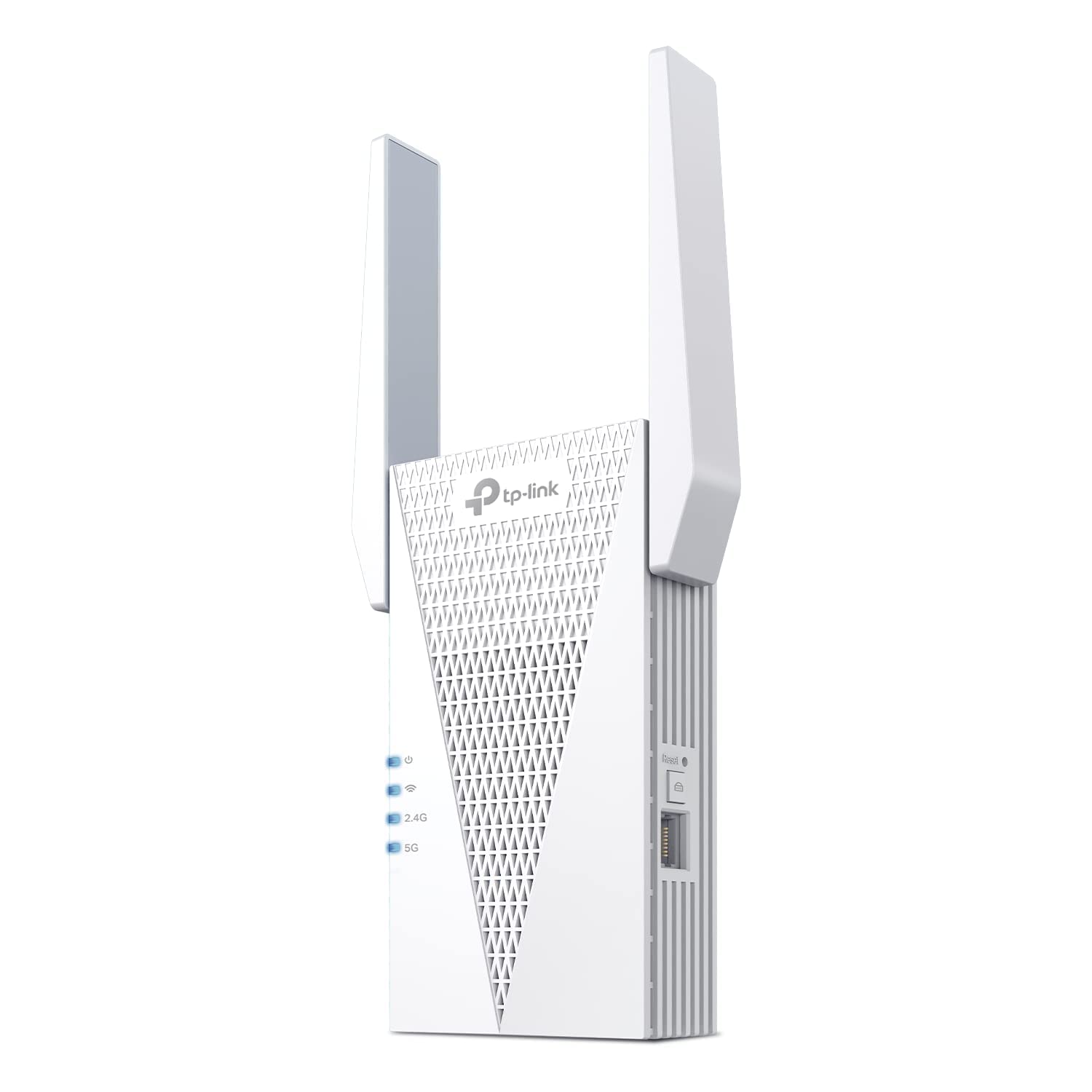
4,000+ ratings
Read Amazon ReviewsTP-Link RE715X
Consider the RE715X if its higher listed 5 GHz capacity, broader stated coverage, or Access Point mode better matches your setup.
The RE615X remains a reasonable fit when its listed capacity and coverage are sufficient and you do not need that additional mode.
- The RE715X lists up to 2,404 Mbps on 5 GHz and 574 Mbps on 2.4 GHz, coverage up to 2,400 square feet, plus Access Point mode using its Gigabit Ethernet port.
- The RE615X offers up to 1,201 Mbps on 5 GHz, 574 Mbps on 2.4 GHz, and coverage listed up to 2,100 square feet.
Repeaters alternative
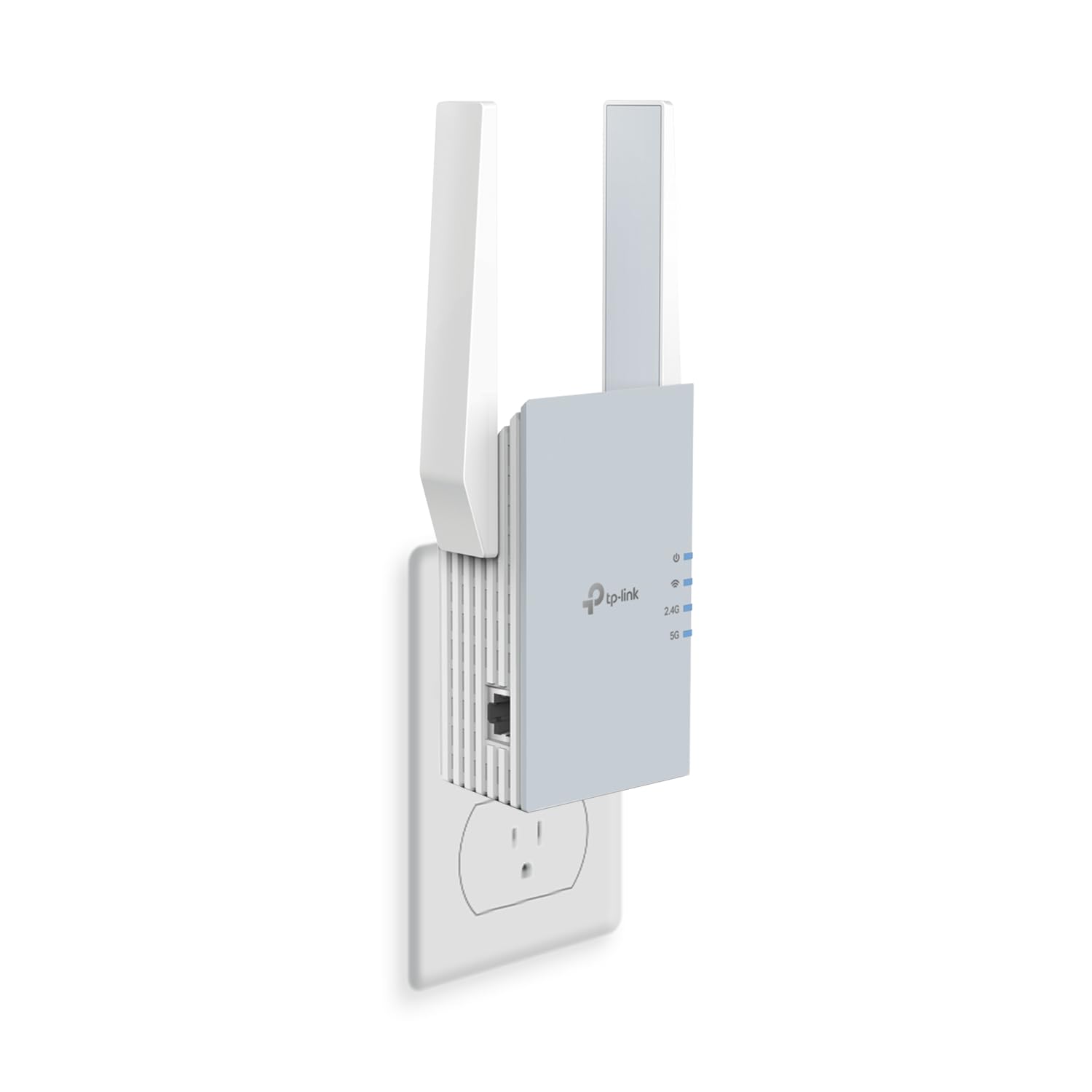
400+ ratings
Read Amazon ReviewsTP-Link RE515X
The RE515X may suit a smaller coverage need if its lower listed 2.4 GHz rate and coverage limit are acceptable and Access Point mode is useful.
Choose the RE615X when its higher 2.4 GHz rate and greater stated coverage better fit your needs.
- The RE515X lists up to 1,201 Mbps on 5 GHz and 300 Mbps on 2.4 GHz, with coverage up to 1,800 square feet.
- Its listed features also include Access Point mode through the Gigabit Ethernet port.
- The RE615X lists up to 1,201 Mbps on 5 GHz, 574 Mbps on 2.4 GHz, and coverage up to 2,100 square feet.
Is TP-Link RE615X Worth It?
The TP-Link RE615X is worth considering when the goal is to extend an existing dual-band Wi-Fi 6 network into a weak-coverage area.
App-guided setup, a placement indicator, a Gigabit Ethernet port, and EasyMesh compatibility make it a practical feature set for that job.
Buy it with realistic expectations: an extender can improve reach, but it does not directly raise your internet speed, and placement and home layout matter.
Confirm EasyMesh compatibility if you plan to use that feature, and look elsewhere if 6 GHz support is a requirement.
Your review at a glance
1,000+ ratings
Read Amazon ReviewsTP-Link RE615X
A useful fit for homes needing broader Wi-Fi coverage, app-guided setup, and a wired connection for a nearby device.
- Dual-band Wi-Fi 6 extender with maximum listed rates of 1,201 Mbps on 5 GHz and 574 Mbps on 2.4 GHz.
- Two high-gain directional antennas and Beamforming technology are designed to improve signal reach and reliability.
- Coverage is listed up to 2,100 square feet, with support for up to 64 devices.
- Gigabit Ethernet port for connecting a wired device near the extender.